Small Store, Big Heart!
February 13, 2026
February is a good time to highlight Steep Hill’s big heart! February 14 is Valentine’s Day, a minor religious holiday that has become a Hallmark holiday to celebrate romance with roses, chocolates and cards. And February is “heart month”, encouraging people to stay active and healthy to prevent heart disease. At Steep Hill we have all the ingredients for a Valentine’s Day splurge, and for a heart healthy diet during the rest of the month. And we also really have a heart, when it comes to community. Steep Hill is celebrating the International Year of the Woman Farmer by sharing stories of women farmers who are our suppliers. We are supporting community connections within our own neighbourhood, and with neighbours who live across international borders. Our featured recipe makes for a fun Family Week activity when the kids are on school break. And you can read about how staff and volunteers combined their big hearts with quite a bit of elbow grease to make our store an even more welcoming place!
Marking The International Year of the Woman Farmer
The Food and Agriculture Organization (FAO) of the United Nations has designated 2026 as the International Year of the Woman Farmer. Worldwide, women make up approximately 40% of workers employed in agrifood industries. They work in diverse roles in all sectors and levels of food production, ranging from agricultural labourers, fishers, and apiarists to processors, traders, small and large business owners, and researchers. They may or may not be landowners themselves and may not be directly paid for their labour.
Despite the importance of their contribution, women’s work is often labour-intensive, low-paying or unpaid, unstable, and subject to a variety of systemic barriers. Women may face legal or tradition-based obstacles to land ownership, finance, education, participation in decision-making, and access to markets for their products. Past FAO reports indicate that women farmers experience issues related to both gender inequality and climate change. In terms of the latter, the production and income of women farmers is disproportionally affected by average temperature increases and drought, due to the intersection of climate change with existing gender disparities in income, education, and employment opportunities.
FAO’s purpose in designating the International Year of the Woman Farmer is to highlight the contributions and challenges of woman farmers and to facilitate both policy change and investment to address gender inequality and empowerment and food system resilience.
One of the FAO’s goals for the year is to tell the stories of woman farmers. A number of Steep Hill’s suppliers are women farmers, so some of their stories will be featured in this issue and upcoming editions of the Steep Hill Newsletter. For more information please see the Food and Agriculture Organization website on International Year of the Woman Farmer (IYWF) – and read on to learn about one of Steep Hill’s women farmer suppliers.
Farmer Julie Maxwell Shares Crocus Hill Garden’s Story
Crocus Hill Garden (CHG) is a 2-acre veggie farm on Treaty 6 Territory near Maidstone, SK. We grow a wide variety of vegetables using low-till, ecological methods and sell primarily through a Community Shared Agriculture (CSA) program, although you’ll sometimes find our produce on the menu at various Saskatoon restaurants and on the shelves at Steep Hill Food Co-op! Our team is small; my partner Thomas and I do the bulk of the work, along with some part-time employees and volunteers at busier moments.
I’m the fourth generation to farm on the land where CHG exists. My great-grandparents and grandparents had small/medium diversified grain and livestock operations, and my parents ran a mid-sized conventional grain farm. I grew up collecting eggs with my grandpa, stealing peas from my mom’s massive kitchen garden, and hopping in the combine to spend time with my dad during harvest season. That said, I never envisioned myself staying on the family farm or making a career of it until I moved to Ontario for university and learned about the CSA model. This smaller-scale, more diversified, community-oriented way of growing and selling food felt so much more fun and accessible to me than commodity-style farming. It also aligned more closely with my own personal values of sustainability. I worked on a few CSA veggie farms in Ontario, but found there was nowhere like this in Saskatchewan. I had to start my own business.

As a person who loves spending the day outside doing purposeful manual labour more than anything else, I liked being a farmworker much more than I liked running a farm. However, I now enjoy all the planning, organizing, delegating, and decision-making that is required of me. Above all, I feel honoured and excited to be able to create meaningful work opportunities for young people in our community. Offering high quality jobs is one of our top priorities as we work on scaling up the business.
We face challenges that are not unique to us: rural isolation, increasingly unpredictable and difficult weather patterns, challenging profits margins, and a huge lack of regional food infrastructure or any kind of government support for small-scale and sustainable farms. In the off-season, I work with the National Farmers Union (NFU), an organization of and for farmers and farmworkers in Canada. If you care about supporting farmers (which I know most Steep Hill members do), one of the best things you can do is support the work of the NFU. Non-farmers can even join us as associate members!
Do You Enjoy Outreach or Governance?
While Steep Hill currently has a full complement of volunteers who work directly with the store, either as in-store workers or as volunteers to keep the store uncluttered and organized, we are always in need of people to work ‘behind the scenes’ to ensure Steep Hill’s continued well-being and success.
There are loads of volunteer opportunities with the Board or the Co-op’s various committees. We would be delighted to have new people on the Newsletter Committee, to name just one example! We would also love to do more outreach and education events but need people who are willing to take a lead role or assist in these areas. If any of these options sound appealing to you, please contact Amielle.
Two hours of volunteer work gives you working member status for the following month, which provides you with the working member discount (6% off the shelf price). For in-store volunteer work, sign up for a shift in the store or by calling or emailing to request a shift.
Counting, Cleaning and Keeping The Co-op On Track
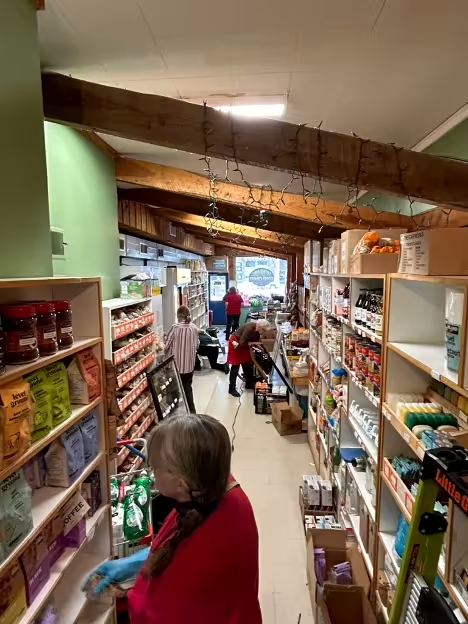
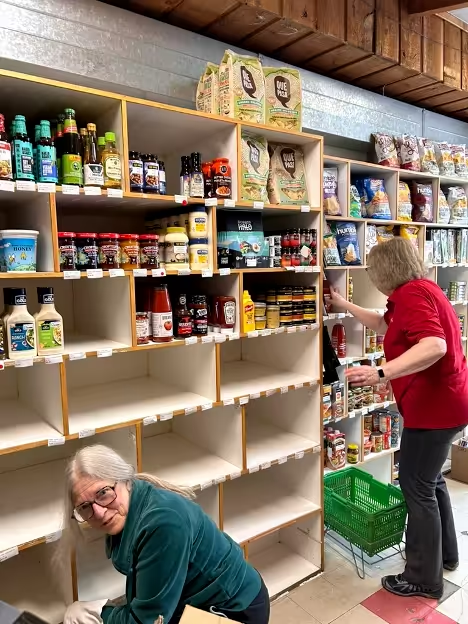
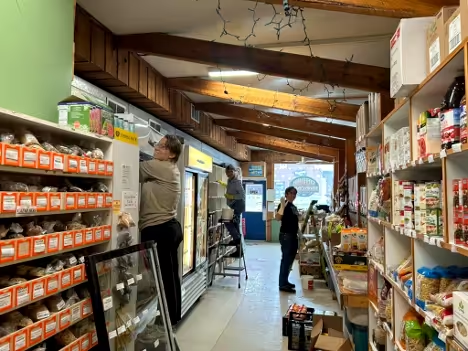
Our two-day closure on February 1 and 2 were a couple of the busiest days of the year! Our fiscal year ends on January 31, so staff and volunteers of the Co-op started the new year by taking stock (literally) and deep cleaning.
On day one, our numerically competent staff went through every item in the store, counting and weighing each can, jar, bag, and kilogram of diced tomatoes, olives, bulk lentils, and fresh produce. They turned what is often a bit of a tedious job into a very enjoyable and efficient process. We thank them for their help in knocking this very large task off the store’s annual to-do list.
The next day, our volunteer cleaning and fix-it crew went to work. No shelf was left unwashed, and all coolers were emptied, cleaned, and sanitized. Fans were vacuumed, filters changed, and overhead spaces given a much-needed vacuuming. Needed repairs to sinks, coolers, and the bathroom were completed. The broken freezer (to be replaced when funds allow) was removed and recycled for parts, making way for better air circulation for the furnace and temporarily creating a convenient nook for the grocery carts. After a 12-hour day of cleaning, the Co-op feels lighter and brighter.
A very heartfelt and sincere Thank You to everyone who pitched in to help our cleaning efforts: Nancy Allan, Anne Brander, Cecile Coppens, Shirley Fredeen, Belinda Hernandez, Lucie Panko, and Karen Weingeist, along with board members Reuben Kellen, Louise Ranger, and Gary Wilson all put in a generous number of hours lending their helping hands. All told, the group put in a combined total of 70 (!!) hours into lifting, moving, fixing, hauling, washing, and cleaning our store. Thanks to our Steep Hill community, we reopened on February 3 with a sparkle and shine, ready for our annual audit, with cleaner and better maintained spaces for workers and shoppers alike.
Get Growing
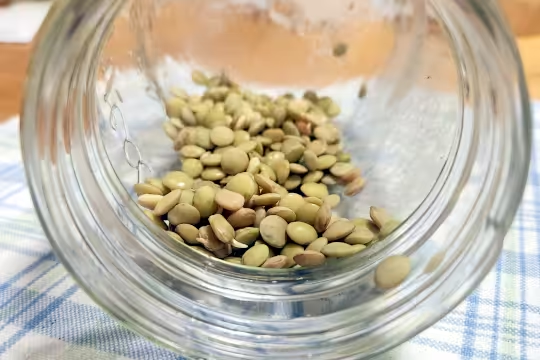
When winter seems to last forever, and the garden is still under snow, you can grow a taste of spring in your kitchen. It’s easy, takes no special equipment and provides fresh crunchy “greens” in just 3 days. Lentil sprouts!!
Many kinds of seeds can be sprouted indoors, including broccoli, alfalfa, radish and mung bean. But have you tried lentils? The sprout provides a refreshing leafy green, while the lentil brings a toothy crunch to the table. Toss them into a salad, build them into a cheese sandwich, wrap them up with grilled chicken and avocado. If you make bread at home, toss in a handful of sprouted lentils for extra nutrition and moisture.
Sprouting changes the nutritional content of the lentil seed. The process of germination creates more C, K and B vitamins. It breaks down the natural proteins to make them more easily digestible. It boosts anti-oxidants that might otherwise be reduced by the cooking process. Trace minerals such as iron and zinc are more readily absorbed by the body.
What you need: A glass jar such as a pickle or spaghetti sauce jar. A sieve. Two tablespoons of green or brown lentils. If you don’t have a sieve, a thin tea towel can be used instead.
Pro Tip: Older lentils take longer to cook and to sprout. For the best results, choose lentils from the most recent harvest, if possible. Choose organic lentils that have never been sprayed.
-
Put 2 tbsp. of green or brown lentils into a jar. Add water to half fill the jar. Give it a stir. Soak the lentils for 1-2 hours.
-
Using a sieve (or a thin tea towel) cover the opening of the jar and drain the water. Turn the jar on its side and shake it to spread the lentils. Lay the jar on the counter or windowsill for 24 hours.
-
The next day, add water, swirl it around and drain. Spread out the lentils and set the jar on the counter. Repeat this process 2 times a day, for 3 more days.
-
By day two, you’ll see tiny little sprouts emerging from the lentils. The lentils will be edible and crunchy. In 3-5 days, the sprouts will be fully formed. After 5 days, stop soaking the lentils and store the jar in the fridge.

Lettuce Be Crisp!
Salad in wintertime is a refreshing treat, but after a few days in the fridge following a long trip from sunny southern climes, lettuce might take on a bit of a dejected appearance. Thankfully, you can cheer it up with a nice cold bath. You will be impressed with how resilient a droopy head can be, and how long it will stay fresh after being rehydrated by following the below steps.
-
Slice the end off the head of lettuce.

Photo Credit: Cathy Holtslander -
Fill a large bowl (or your kitchen sink) with cold water.
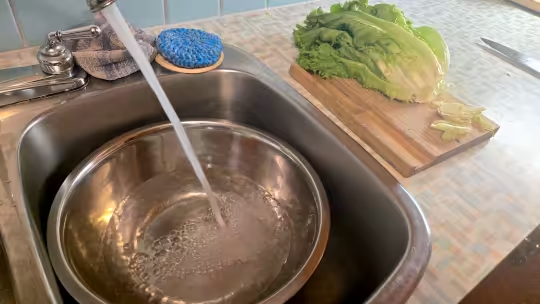
Photo Credit: Cathy Holtslander -
Separate all the leaves from the head of lettuce and put them in the bowl of water. If you notice damaged leaves, just tear out the damaged part and toss in the compost. The rest of the leaf will be fine. Gently press the leaves into the water, so they are mostly submerged.

Photo Credit: Cathy Holtslander -
After at least 20 minutes, transfer about half the leaves at a time into your salad spinner - don’t pack them too tightly, then spin.

Photo Credit: Cathy Holtslander -
Put the lettuce into one or two plastic bags, large enough that the leaves are not crushed. It should keep nicely in the crisper for a week or so.

Photo Credit: Cathy Holtslander
Caring For Community Across Borders
In January, Steep Hill’s Vice-President JoAnne Jaffe wrote to Seward Community Co-op in Minneapolis, a local food co-op similar to ours, to express our solidarity with them and the people of Minneapolis. She said “We’ve been following the horrendous events of the last weeks and want you to know we send our love and support. We’re appalled and disgusted by the actions of the US government but heartened by the sense of community and humanity of so many Twin City residents.” She let them know many of our members are boycotting travel to the US and trying not to buy US products due to Trump’s threats to Canada, and are also fighting the Right in our own backyard. She asked what we could do to support Seward Co-op and their community. Here is their response:
Hi JoAnn, thank you so much for this kind and thoughtful message. We are all too aware that this is not a localized issue and the impacts of these and other actions from the U.S. government are being felt worldwide (and are sadly part of a broader global trend towards fascism and authoritarianism). We dearly love our Canadian neighbors - especially us Minnesotans - so this message means a lot, and we too stand in solidarity with you all as you feel the impacts of the threats coming from this administration.
While much of the direct mutual aid and rapid response is being coordinated via hyperlocal neighborhood networks, our current focus as a co-op is mostly financial, supporting community members who are most immediately at risk and are sheltering in place at home. We are currently utilizing our “round up” program at the registers to raise funds for vetted mutual aid groups that are providing rent support for neighborhoods in the immediate vicinity of our stores - I’ll link those below.
We also have a number of community partners doing ongoing work supporting our immigrant communities- I’ll add those here too; any one of these are great options to support as well if your community is interested in or able to provide direct financial support.
Those are all monetary assists, but I also just want to note that one thing we are really sitting in right now is gratitude for being a part of a broader cooperative community. Knowing we are all working towards the same goals and principles of care and concern for community both in and outside this crisis is invaluable and grounding. We are grateful to know this spirit carries across borders and that we can see the values of “stronger together” in action. Cooperation is something we live every day and to watch it expand into action - standing vigil, observing, documenting, protesting, transportation, intervening - in our city and beyond is an incredible thing.
Thank you again for reaching out and standing in solidarity together!
In community and cooperation,
Laura Larson (she/her)
Equity and Community Engagement Manager
Ways to Help
Minneapolis Neighbourhood Rent Support:
- Central Area Impacted Neighbors Support Fund
- Support Powderhorn Families with Urgent Rent Relief
- Support Bryant Families in Urgent Need
- Support Phillips Families in Urgent Need
Organizational Support in the Twin Cities:
Isuroon Halal Food Assistance program - the only local food shelf that meets Halal dietary standards and cultural preferences of the Somali community. Isuroon also helps with transportation, navigating the welfare systems, and mental & physical health concerns, especially for new mothers, infants, and elderly patients.
Immigrant Law Center of Minnesota - provides free legal services and outreach to help immigrants and refugees secure legal status, work authorization, and citizenship.
Pillsbury United Communities - Providing food, space for legal representation, personal care items, community connection and critical services and resources for immigrant communities in the Twin Cities.
Community Potluck, Music, Spoken Word and Jam Session!
Catch the Wave on the last Friday of every month at Grace Westminster church! Brian Paul DG and friends host a potluck (6 PM), variety show (7:15 PM) and music jam (9:30 - 10 PM). On February 27 the variety show features spoken word artist EcoAbriJanelle and musician Dwayne Lasas, in addition to open-mic performers. Everyone is welcome! This is a great way to meet neighbours, share some food and enjoy the artistry of our community members. Grace Westminster is one block west of Steep Hill on the corner of Eastlake and 10th Street.

Put Your Pop Cans To Work
You can use SARCAN’s Drop and Donate program to help Steep Hill! To “volunteer” your pop cans and returnable bottles, go to the Drop and Go entrance off to the side of the main doors. Fill in the computer screen form, and put the phrase “Steep Hill Food” to tell SARCAN where your donation should go. The machine will print a barcode sticker for your bag or box of cans/bottles. SARCAN will calculate the value of your donation and e-transfer it to Steep Hill.
We Want to Hear From You!
For information about products and the store, email us at hello@steephillfood.ca or call 306-664-4455.
To contact the Board of Directors with ideas, feedback, concerns or questions, email board@steephillfood.ca or fill out a “How did we do today” card when you are in the store.
Thanks to Amielle Christopherson, Adam Douglas, Amy Jo Ehman, Cathy Holtslander, JoAnn Jaffe, Brian Paul, Louise Ranger and Maryann Scott for contributing to this Newsletter! If you would like to join the newsletter crew, email board@steephillfood.ca.
Your grocery store on Broadway!